Showing posts with label UNESCO world heritage site. Show all posts

Wednesday, January 26, 2011

The Philippines: ILOCOS SUR, Heritage City of Vigan (Part 2)

Our three of four stops in Vigan City were Bantay Bell Tower, Baluarte and Grandpa's Inn.

Vigan is the hometown of the 6th Philippine president, Elpidio Quirino, born in 1890 (and if the calesa or horse-drawn-carriage driver is to be believed) inside the provincial jail where his father was working as a warden.  


Vigan is also home to Fr. Jose Burgos, one of three priests martyred during the Spanish era, due to charges of mutiny in 1872.  The three priests were collectively known as GOMBURZA: Gomez, Burgos and Zamora.


The main church in Vigan is St. Paul's Metropolitan Cathedral: above the church doorway is an alcove depicting the conversion of St. Paul.  Unfortunately, due to politics, the church is tainted with the blood of a politician who was gunned down inside the cathedral.


Historic Town of Vigan (Destination 4 of 4)
UNESCO World Heritage Site

"Established in the 16th century, Vigan is the best-preserved example of a planned Spanish colonial town in Asia. Its architecture reflects the coming together of cultural elements from elsewhere in the Philippines, from China and from Europe, resulting in a culture and townscape that have no parallel anywhere in East and South-East Asia." (UNESCO)
This "town" is reminiscent of Spanish times and is perfect for time travel adventures.  The streets have brick tiles, structures are made of wood and antique shops, selling antique wares and souvenirs, line the streets.  Some parts are still well-preserved, while maintenance in other parts are somewhat lacking and will have to be improved to continue the preservation of a heritage.  There is no other part of the country like this...old, peaceful, simple, quaint, inspiring and charming.

Calle Crisologo

Antique Shop
 This ended our tour of lovely Vigan, Ilocos Sur.  If one has the time, it is best to spend a night in this city and enjoy the view in the moonlight.

Part 1 of the Ilocos Sur trip can be read here.

COSTS TO VISIT VIGAN
In Vigan City, the tourist spots are free of charge.  One only needs to spend for transportation, food and accommodation.

For transportation, one can go around the tourist places on calesas or horse-drawn carriages for USD3.50 per hour or ride any public vehicle like tricycles or ride a rented van.

For sumptuous Ilocano food, average cost of meals range from USD10-20 per person.

For accommodation, a night would cost around USD50 a night for double occupancy.

Fall in love with Vigan...

Monday, January 24, 2011

The Philippines: ILOCOS SUR, Heritage City of Vigan (Part 1)

Ilocos Sur ("sur" means south) is located south of Ilocos Norte.  The main tourist attraction is the heritage city of Ilocos Sur which can be toured in one day.

Getting around.  A calesa (horse-driven carriage) can take one around the heritage city for USD3.5 per hour IF and ONLY IF you did not rent a van for the trip.  The calesa will take one around the heritage city - Baluarte, bell tower, clay making, etc.  But again, if you rented a van, the van can take you around these same places.  

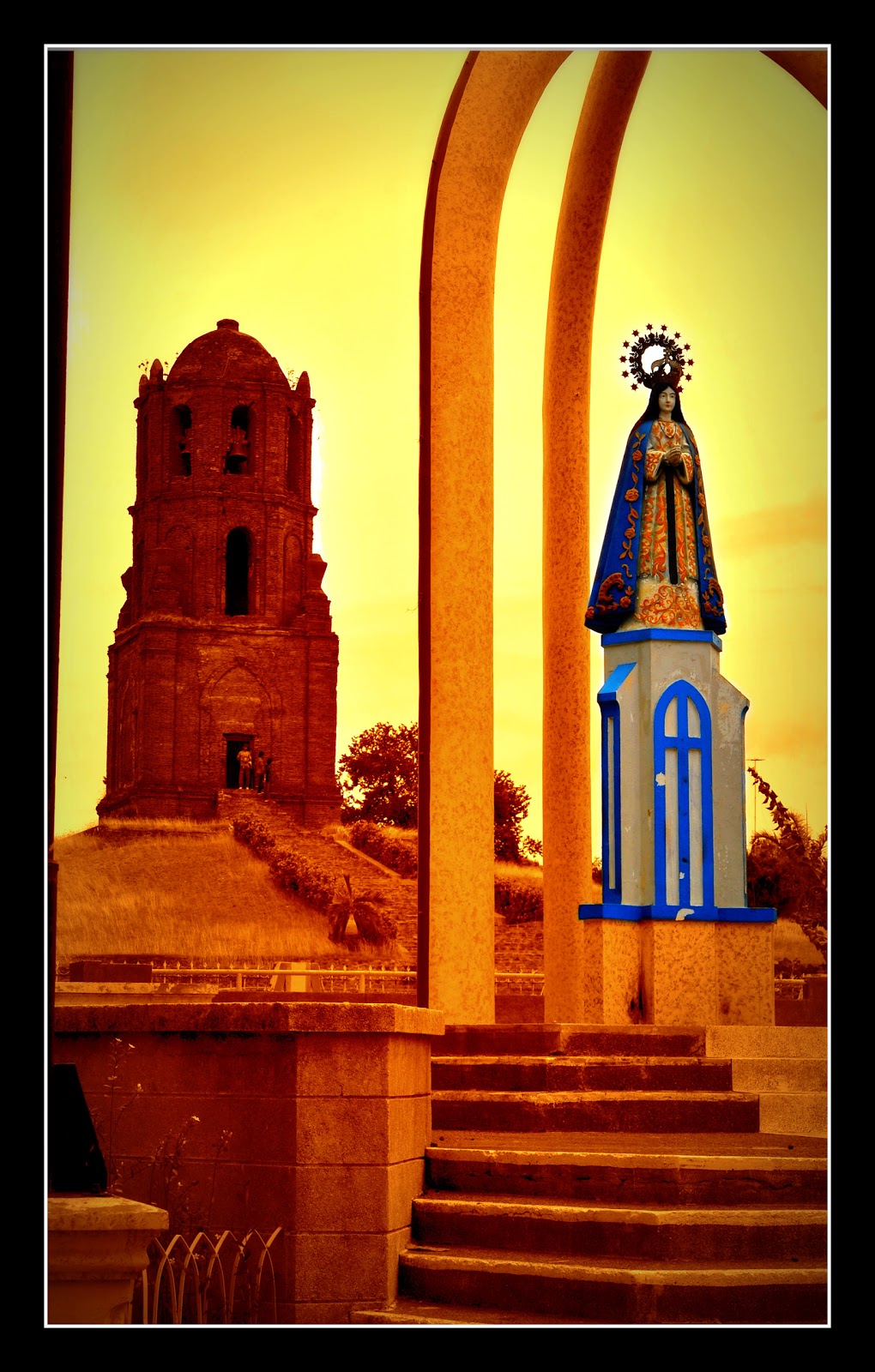
Bantay Bell Tower (Destination 1 of 4)
An old structure in the St. Augustine's Parish Church compound...one can see Ilocos Sur skyline from the bellfry.
Bantay bell tower in the background

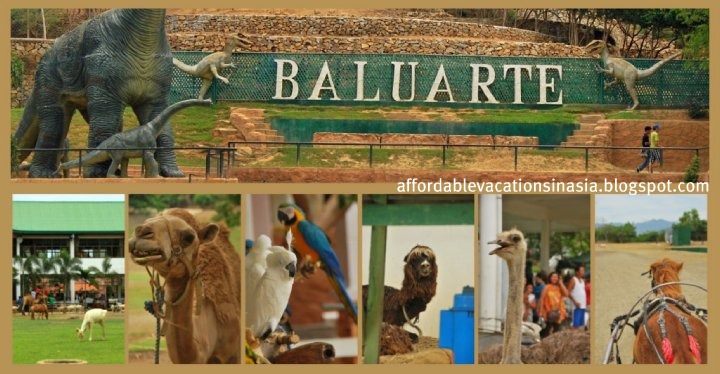
Chavit Singson's BALUARTE (Destination 2 of 4)
Open 7am-6pm
"Where animals graze freely and wander around with the humans" - this is one rare sight in the Philippines.  A zoo, by itself is a rare thing in this country, much more a zoo with animals that roam together with humans! And what's more, entrance and rides are free!  Of course there's a donation box, but nobody is watching if you put in donation or not.  In the Philippines, this is impressive.


True to its by-line in their website, Baluarte is "Not just a zoo, Baluarte is an interactive wildlife sanctuary and facility".  There are shows scheduled all throughout the day and if one is lucky or can wait for the schedule, one can also watch them for free.

One can ride the "tiburin", a small-horse-drawn carriage and camel for free.


One can take pictures with these white and colorful birds for free!  Better try this out in Baluarte...in Jurong Bird Park in Singapore, posing with even smaller birds costs $5!


The deers in the place are allowed to roam around like dogs.  Imagine yourself in the streets along with some stray dog, that's the scene in Baluarte, really cute!  A deer would come near you and check you out by sniffing, like dogs do!

ostriches, tiburins and deers graze freely
Modesty aside, we've been to zoos in Singapore, Bangkok and Hongkong with an impressive number of animals in custody but it was only in Baluarte that the experience was "interactive" and for free.  If only for this, Baluarte is worth the trip!


Grandpa's Inn (Destination 3 of 4)
We had our lunch at Grandpa's Inn, one of the many old brick houses within the heritage city, that is both an inn and a restaurant.  The furnitures and fixtures are really antique and with a little imagination, one can be transported back centuries ago.

upstairs receiving area

room accommodation

restaurant
In the next post is our visit to the UNESCO World Heritage site in Vigan...

Wednesday, December 1, 2010

OLA Macau: 9 spots for a side trip from HK

Got some "free and easy" days from your Hongkong family vacation?  Then visit Macau!
For a day and a half, here are 9 places to go/things to do there.... OLA MACAU!

Macau is divided into three main sections: Macau Island (Ilha de Macau in the map), Taipa Island (Ilha da Taipa) & Coloane Island (Ilha de Coloane).  From Hongkong, one enters Macau through Macau Island; from the international airport, one enters Macau from Taipa Island.

http://www.geographyiq.com/images/mc/Macau_map.gif


Affordable Ferry from Hongkong to Macau.  TurboJet offers a very convenient and fast route to and from Macau.  If you are able to catch the 6am sailing schedule, the trip will cost USD17.50 economy class, while the next trip at 845am costs higher at USD27.50.

Affordable hotel.  We stayed at Metropark Hotel Macau.  Depending on the tourist season, a superior double bed room can go as low as USD70 a night (we went November).  If you arrive earlier than check-in time, you can leave your luggage with the concierge; same case if you have to check out but still have some places to cover, leave the luggage with the concierge.

Affordable meals. If one takes the 6am trip plus immigration procedures, you are ready to tour Macau as early as 8am.  Generally, Macau is still asleep at this time.  But local restaurants serving breakfast are already open at this time.  We found these restaurants along Rua de Pequim, along Metro Park.  Breakfast is very reasonable at around USD5.

For a gastronomic feast in Macau, read this post Macau Has Taste!

Affordable budget:  Macau's official currency is MOP - Macau Pataca.  For this blog, conversion rate used is USD1: MOP7.75.

For a USD250 per person, you have toured most of Macau and enjoyed its sumptuous food!
   Turbo jet to and from HK - USD 45
   Hotel USD 70
   Entrances/ Other fees:
      Gondola ride - USD 14
      Macau tower observation deck USD13
   Meals and transportation and souvenirs USD 108

Optional shows/activities (and will, of course, entail additional budget!):
   Dancing Water in City of Dreams - USD49-USD165 depending on seats
   ZAIA in The Venetian Macao - USD50-USD166 depending on seats
   Adventure in Macau Tower, like Mast Climb, Bungy Jump, Skywalk, Sky Jump - USD75- USD321
   Casinos - how much are you willing to lose?

The Tour.
DAY 1:  
Coloane Island (9-10:30am)
(Bus trip from Macau Is. to Coloane Is. may take around 30mins)
After breakfast, ride the bus going to Coloane Island where the original Lord Stow Bakery selling egg tarts are.  We wanted to taste the freshly baked egg tarts from where it all started.  And it was worth the trip - there is nothing like the original!  The bakery is a very modest shop in Coloane Town Square.  

Since you just had your breakfast, just buy some egg tarts to go!

2 Stroll through the main street (right from Lord Stow if facing the street) and you'll find tree-lined highway along a beautiful lake with mountains in the background.  The place is simply peaceful and picturesque.  Further along the street, on the right side is the Chapel of St. Francis Xavier.   

From Coloane, ride the bus to Taipa Island (15minutes).

Taipa Island
3 City of Dreams (11am-1pm) 
This property houses three hotels and features attractions such as Dragon Treasure (free, 10mins, starting 12nn), Kids City (free, opens 10:30), Vquarium, and The Dancing Water (evening shows, tickets ranging USD49 to USD165).

One has the option to dine within the City of Dreams, but if you want a gastronomic experience at a much lesser price, take a taxi ride for 3mins OR walk for 18mins. to Rua do Cunha (Food Street), 1.5kms away from City of Dreams.  (Tip: Ride the taxi across City of Dreams, on the Venetian Macao side of the road so you take the shorter route to Rua do Cunha.)

4 Rua do Cunha (1pm-2:30pm)
A Food-lover's Haven, is a narrow pedestrian street in the town center of Taipa, lined by shops selling almond cakes, koi-kei, peanut candy, egg rolls, etc.  Within the area are restaurants, like the Dumbo restaurant, serving Portuguese food, at very reasonable price. One can have a full sumptuous meal at USD15-20.

From Rua do Cunha, take a taxi ride for 5mins OR walk for 20mins. to Venetian Macau Resort Hotel, 1.9kms away.

This is a hotel where one finds shoppes, restaurants, casino, and a dome painted with a sky to depict a day that is forever sunny.


Gondola rides are available at USD14 per person, on board Venetian gondolas while gondoliers serenade as you ride through the "canals".  This scenario is copied from Venice gondolas.


If you are fond of dance and aerial acrobatic shows, check out ZAIA by Cirque de Soleil.  Performance is for 90 minutes and schedules vary monthly so it's better to check out the performance schedules first. 

There's a reason why I suggested The Venetian to be the last on the Taipa island itinerary.  From The Venetian, one can take free shuttle rides to designated parts in Macau Island.  

From The Venetian, ride the shuttle to Sands Macao Hotel.  From Sands, walk 600meters in 3mins to the Fisherman's Wharf for dinner or sightseeing.

Macau Island
6 Fisherman's Wharf (6pm-9pm)

From Fisherman's Wharf, you may go back to the hotel to wash up or rest for an hour or go straight to the Casinos.  Here, seafood restaurants may be a bit pricey but food is really good!


7 Casinos (10pm - till you drop)
Outside the casinos, we took lots of photos.  Very prominent among the casinos is the Grand Lisboa, standing tall and grand among all the casinos in the area. The lights are a delight to the eyes.  

Grand Lisboa, deserving of its name, is in the middle of Macau Island and can be seen from almost any vantage point (night view and day view)
One casino you have to go into is Wynn, not for the games, but for the Tree of Prosperity show.  It's free and a must-see!  Outside Wynn, there is also the Dancing Fountains Show.   
Tree of Prosperity, shows every 30 minutes

DAY 2:
Macau Island
8 Senado Square and St. Paul's Ruins (9am-11am). 
Stroll through the Historic Centre of Macao, inscribed by UNESCO as a World Heritage Site.  UNESCO briefly describes the historic centre as follows: 
Macao, a lucrative port of strategic importance in the development of international trade, was under Portuguese administration from the mid-16th century until 1999, when it came under Chinese sovereignty. With its historic street, residential, religious and public Portuguese and Chinese buildings, the historic centre of Macao provides a unique testimony to the meeting of aesthetic, cultural, architectural and technological influences from East and West. The site also contains a fortress and a lighthouse, the oldest in China. It bears witness to one of the earliest and longest-lasting encounters between China and the West, based on the vibrancy of international trade.

The highlights in the Historic Centre of Macao, includes the Leal Senado Square, which is the main town square, the Cathedral, St. Dominic Church and the Ruins of St. Paul. Bazaars, small shops, FOOD shops line the road going up to the Ruins. Shops hawk their items for sale, mostly food, and offer free food tasting.  One can get their gastronomic fill tasting these food products all the way up to the Ruins.  The beef products are very good here.
St. Paul's Ruins, captured from a window reflection
Other places of interest within the Historic Centre are Barra Square with the A-Ma Temple, Moorish Barracks, Lilau Square, Dom Pedro V Theatre, St Joseph's Seminary Building and Church, Sam Kai Vui Kun Temple, Na Tcha Temple, The Section of the Old City Walls, and Mount Fortress.  

Macau Tower (11am-12nn).  Go up Level 58 for the Indoor Observation Deck or Level 61 for the Outdoor Observation Deck at a reasonable admission USD13, you get to see a 360 deg panoramic view of Macau, Taipa and Coloane!  Sections of the floor are in glass, so you can see the view 223 meters under!

The first TurboJet trip out from Macau to Hongkong in the afternoon is 1:15pm.  Make that side trip to Macau!

For a gastronomic feast in Macau, read this post Macau Has Taste!


Friday, November 19, 2010

The Philippines: 7 to go in ILOCOS NORTE (part 4)

http://blauearth.files.wordpress.com/2010/09/ilocos-norte-map.j
7 must-see destinations in Ilocos Norte
The tour in Ilocos Norte took us to 7 municipalities in the province.  We rented a van for a two-day tour of Ilocos Norte and Ilocos Sur, for $170.  The van comfortably seats 7 persons.  Contact number of the van operator is +639194746513.

In part 1 of this post, we have been to (1) Cape Bojeador Lighthouse in Burgos and (2) Wind Farm in Bangui.  In Part 2, we continued on the tour to the many attractions in (3) Pagudpud alone.  In Part 3, we moved on to (4) the Acrobatic Bell Tower in Bacarra and (5) Fort Ilocandia Resort and LaPaz Sand Dunes.

In this post, we write about the Church in Paoay and the coral formations in Currimao.


St. Augustine Church (Destination 6 of 7)
UNESCO Heritage Site
Paoay, Ilocos Norte

The St. Augustine Church in Paoay is an UNESCO Heritage site, one of the four "Baroque Churches of the Philippines" (the other three are located in Intramuros Manila, Santa Maria in Ilocos Sur, and Miag-ao in Iloilo) to be inscribed in 1993 because "their unique architectural style is a reinterpretation of European Baroque by Chinese and Philippine craftsmen".
St. Augustine Church, Paoay
"The church was started by the Augustinian Fr. Antonio Estavillo in 1694. It was completed in 1710 and rededicated in 1896, just three years before the expulsion of Spanish rule in the country. The style of the church has been dubbed “Earthquake Baroque” by Alicia Coseteng, one of the early authorities on colonial church architecture. Because the buttresses extend out considerably from the exterior walls, the entire visual experience becomes three-dimensional, unlike most of the churches in the country where the inherent beauty of the church is limited only at the facade." (Read More: Heritage Conservation Society: on Earthquake Baroque: Paoay Church in the Ilocos) "


Coral rock formations (Destination 7 of 7)
Currimao, Ilocos Norte

Thirty minutes from Paoay church, we went to Currimao where the famous coral rock formations are found. This is also a location scene for the shooting of a local movie years ago.

Coral rock formations in Currimao
"Almost miraculously rising from the crystal clear waters; reaching heights of more than 12 feet (they can provide shades at noontime); these jagged monuments are of the same material that has been used to build massive baroque churches in the region” (Ilocos Norte: A travel guide book; II Ed; 2005).
This was our last destination in Ilocos Norte.  From Currimao, we went on to the Heritage City of Vigan in Ilocos Sur.

The Philippines: 7 to go in ILOCOS NORTE (part 3)

http://blauearth.files.wordpress.com/2010/09/ilocos-norte-map.j

7 must-see destinations in Ilocos Norte
The tour in Ilocos Norte took us to 7 municipalities in the province.  We rented a van for a two-day tour of Ilocos Norte and Ilocos Sur, for $170.  The van comfortably seats 7 persons.  Contact number of the van operator is +639194746513.

In part 1 of this post, we have been to (1) Cape Bojeador Lighthouse in Burgos and (2) Wind Farm in Bangui.  In Part 2, we continued on the tour to the many attractions in (3) Pagudpud alone.

In this post, we continue on our tour to Bacarra, LaPaz, Paoay and Currimao.


Acrobatic Bell Tower (Destination 4 of 7)
Bacarra, Ilocos Norte

From Pagudpud, we traveled a couple of hours to Bacarra where the Acrobatic Bell Tower is, so called because its bell tower tilted and fell due to an earthquake, thus an "acrobatic" act.  Notice the bell tower is made of bricks, quite a common site in Ilocos Norte, their old structures commonly were of brick materials.


Acrobatic Bell Tower

Our first day tour ended with a sumptuous meal in one of the local restaurants in Laoag.  There is not much night life in Laoag.  At Java Hotel where we stayed, they have a bar called Eagle's Nest Bar where some of the locals and tourists go to at night.


Fort Ilocandia Resort and LaPaz Sand Dunes (Destination 5 of 7)

On our second day of the tour, we got a glimpse of the Fort Ilocandia Resort, a hotel originally constructed by the (former Philippine President) Marcos Family for their daughter Irene's wedding reception.  The hotel structure is made of bricks and is within Laoag City.

Fort Ilocandia Resort

Sand dunes.  The sand dunes are found in the coastal village of Barangay La Paz. "The dunes lie to the west of Laoag, between the city and the coast, and to the south of the riverbank where Fort Ilocandia Resort and Casino located." (WikiPilipinas)

The famous LaPaz sand dunes is a film location site, both for local movies (Himala and Panday) and international (Born on the Fourth of July).  It is also known as the"Desert of the North".  A lot of extreme sport activities are done in the 85-sq km sand dunes.

Sand dunes
Our next stop was supposed to be the Malacanang of the North, but since a new governor has recently been elected at that time (May 2010) and has made Malacanang the provincial seat of power, the place was off limits to tourists.

We moved on to our next stops: the St. Augustine Church in Paoay and the coral formations in Currimao.

Tuesday, November 2, 2010

Beijing China: SUMMER PALACE

Day 3 in Beijing:  Picturesque Summer Palace
(3 of 4 destinations)

An Imperial Garden in Beijing, as inscribed by UNESCO as a World Heritage Site in 1998:  it described the place as “a masterpiece of Chinese landscape garden design.  The natural landscape of hills and open water is combined with artificial features such as pavilions, halls, palaces, temples and bridges to form a harmonious ensemble of outstanding aesthetic value”.

View of the entrance of Summer Palace, from the lake
The Summer Palace served as the summer resort for the emperors of the Qing Dynasty and the retirement residence of Empress Dowager Cixi (mother of the emperor) in 1866.  The palace has a lake and a hill.  The Kunming Lake (2.2sq km.) is man-made through excavation of soil and the excavated soil was used to build the Longevity Hill (60 meters high).   We can see that the emperors are fond of this type of architecture, as the lake surrounding Forbidden City was also excavated and the excavated soil made into the hill in Jingshan Park

Kunming Lake, with a view of Longevity Hill

It is so peaceful and serene in the palace.  Willow and other trees provide shade and the view of the lake calms the spirit.  Coming from the stone and bare structures of Forbidden City, one can see that the summer resort provides a breath of fresh air for the emperor’s family.  It is such a welcome retreat! 

Pavilions on Longevity Hill

The Longevity Hill is the highest point in the palace and overlooks the whole palace: with the many halls and pavilions and gardens, and of course, Kunming Lake.  On top of Longevity Hill is the Tower of Buddhist Incense.

Tower of Buddhist Incense, atop Longevity Hill
Upon entering the palace, we were met by the splendid beauty of willow trees and the lake. 
   
Setting for the perfect getaway: Blue skies, green willow trees, serene lake, and a pavilion
Coming from the entrance, we turned right and followed the pathway, through gardens and pavilions and corridors. 

One of the many gardens in Summer Palace
This corridor is recorded as the longest corridor in the world and within its length, are four pavilions, each representing the seasons of the year.

Corridor and pavilion

We passed the entrance of the Tower of Buddhist Incense on Longevity Hill and some of us went up to the tower. 
  
Stairs leading to & from the tower

At the end of the corridor, we saw the Marble boat.  This boat is made of wood but painted to look like marble.  "On each deck, there is a large mirror to reflect the waters of the lake and give an impression of total immersion in the aquatic environment."-(Wikipedia)

"Marble boat", made of wood
From the point where the Marble boat is, we rode a dragon boat to cross to the other side of the lake.

Dragon boat
The dragon boat took us to the place where the Seventeen-Arch Bridge is.  As the name suggests, the bridge has seventeen arches and links to an island, called Nanhu.

Seventeen-Arch Bridge
From the base of the bridge looking up to its highest point in the middle, one cannot see the other side of the bridge; instead, one sees the clouds beyond the bridge.  Since the Bridge is white and kept clean, its feels like entering the clouds and the heavens! What imagination! 

View from the base of the bridge
Not counting the Great Wall, Summer Palace is my most favourite place in the whole tour.
 

Friday, October 22, 2010

Beijing China: GREAT WALL OF CHINA

Day 2 in Beijing: The Great Wall of China
(Destination 3 of 4)
An obvious UNESCO World Heritage Site "In c. 220 B.C., under Qin Shi Huang, sections of earlier fortifications were joined together to form a united defence system against invasions from the north. Construction continued up to the Ming dynasty (1368–1644), when the Great Wall became the world's largest military structure. Its historic and strategic importance is matched only by its architectural significance."
From the Jade Factory, we had our lunch in a local restaurant, after which we then proceeded to the reason we traveled to Beijing: the GREAT WALL!  The ride going there was more than an hour and since it was raining, our driver had to take more caution some parts of the way.  We were really hoping the rain would stop when we arrive at the wall but it didn't.  But that didn't dampen our spirits.  We traveled miles from the Philippines just to see this world wonder, a shower in autumn will not stop us, though it did slow us a bit. 


We went to the Mutianyu section of the Great Wall, where tourists are lesser and therefore, not so congested. We went up the wall through a cable car and still up some stairs. The view at the top was rewarding and so breathtaking! I could not believe we have reached the great wall...it was some kind of feat!


With the intermittent rain showers, we spent the afternoon strolling, taking cover under our umbrellas, and if the wind blows stronger-running for cover in the towers, going out again when the rain showers stop, resume taking photos, breathing in the fresh air, enjoying the moment...it was as if being transported back in a different time zone and era. It was a beautiful "in the clouds" feeling. On our way down, we were supposed to take the slider down the mountain, as in really slide down the mountain! I mentally prepared for this for two months (!) because I have a fear of heights, but because of the rain, the slider was closed.  My son was very disappointed and unbelievably, so was I.  We took the cable car again going down...
The most comprehensive archaeological survey, using advanced technologies, has recently concluded that the entire Great Wall, with all of its branches, stretches for 8,851.8 km (5,500.3 mi). This is made up of 6,259.6 km (3,889.5 mi) sections of actual wall, 359.7 km (223.5 mi) of trenches and 2,232.5 km (1,387.2 mi) of natural defensive barriers such as hills and rivers. (Wikipedia)
The Wall is a product of "stitching" many walls into one piece.  Centuries ago, states within China built walls to protect themselves from invading states. During the dynasty rule, when China was already united, the walls were "stitched" together to form one continuous wall to protect China from foreign invaders like the Mongols.  

One can see the grandeur of this man-made structure but one can only imagine the enormous effort, ambition and will of the ancient Chinese to protect their land, culture and identity. It is no wonder why China is a superpower country, coming from these ancestors. 


Visibility from space: myth or fact?
I was floored to learn that this idea of the Wall being visible from outer space has been disproved by lunar astronauts.  Who would have thought that a careless reference of this idea in the 1700s could mislead a lot of authors to mislead a lot of readers who do not do supplemental research.  Myth or fact, I would still like to imagine it as I have always done!  You should too, our imagination is limitless and priceless!

Here are some interesting anecdotal reports from Wikipedia: 
1 Astronaut William Pogue thought he had seen it from Skylab but discovered he was actually looking at the Grand Canal of China near Beijing. He spotted the Great Wall with binoculars, but said that "it wasn't visible to the unaided eye." 
2 U.S. Senator Jake Garn claimed to be able to see the Great Wall with the naked eye from a space shuttle orbit in the early 1980s, but his claim has been disputed by several U.S. astronauts. 
3 Veteran U.S. astronaut Gene Cernan has stated: "At Earth orbit of 100 miles (160 km) to 200 miles (320 km) high, the Great Wall of China is, indeed, visible to the naked eye." 
4 In 2001, Neil Armstrong stated about the view from Apollo 11: "I do not believe that, at least with my eyes, there would be any man-made object that I could see. I have not yet found somebody who has told me they've seen the Wall of China from Earth orbit. ..." 
5 In October 2003, Chinese astronaut Yang Liwei stated that he had not been able to see the Great Wall of China.


How about you? What do you think?

Sunday, October 17, 2010

Beijing China: AN EMPEROR'S TOMB

Day 2 in Beijing: Chang Tomb
(1 of 4 destinations)
Another UNESCO World Heritage Site (Imperial Tombs of the Ming and Qing Dynasties)

From City Walls courtyard house in Dongcheng, we traveled an hour to the tombs.  We started at 7:30 in the morning.

On the way, we learned that the Ming Tombs is famous because thirteen emperors of the Ming Dynasty are buried there.  The burial site was chosen by, and (his own) mausoleum was designed by Emperor Zhu Di, more popularly known as Emperor Yongle (because he named his era as Yongle, meaning eternal joy).  The site was chosen because of the mountains (earth) surrounding the place, abundant water, wind, and silence, all factors important to Feng Shui principles. One interesting fact was that Emperor Yongle was also believed to design and build the Forbidden City during his rule.  If he had been born in modern times, he would have been an architect!

The whole burial site of 13 emperors in the Ming Dynasty among Tianshou Mountains
The whole Ming Tombs is shown in this picture above:  the burial site starts with a stone memorial arch, a gate, a pavilion, a path with stone animal statuettes lined on the side, a three-arch gate, bridge (over natural water, i suppose, and not excavated) and the final path going to Chang Tomb. The length from the archway to the three-arch gate is called the "Spirit Way" and stretches 7 kilometers.  We didn't go through the Spirit Way anymore but went directly to the Chang Tomb. 
 
Chang Tomb
Here in Chang Tomb, the layout looks the same as the Spirit Way and the Forbidden City: tomb gate, Gate of Eminent Favor, Hall of Eminent Favor, archway, pathway and finally the soul tower "guarding" the mountain where the Emperor is believed to be buried.  "Believed" because the actual bodies have not been excavated; they are buried way deep down the mountain. (Note that only one tomb in the Ming Tombs has been approved for excavation, and that is the Ding Tomb, but that would be another visit to Beijing since we didn't go there.)
Layout of Chang Tomb; partially cut in this pic at upper right is the mound where the emperor is buried


The caption in the entrance of Chang Tomb reads: "The Changling" (ling means tomb) "is the burial mausoleum of ChengZu (1360-1424), Zhu Di, the third emperor of the Ming Dynasty, and Empress Xushi. The construction of the main structure of the mausoleum - the underground palace - began in 1409" and "completed in 1427. It is composed of the underground structure (burial chamber) and surface palace. The Changling is the biggest in scope among the mausoleums in the Tianshou Mountain. The Hall of Eminent Favor and and the Gate of Eminent Favor is built of nanmu, the only hall and gate of such structures still remaining among the Ming mausoleums that look magnificent. Built with materials of excellent quality, they deserve to be treasures of ancient Chinese architecture".
Archway going to the burial site
Buried within the tomb are the treasures or things the Emperor believed he can still use in the next life. They believed that one who dies will still live the same life after death, and so they bury with them things they use everyday in their lifetime, plus some treasures.  That is also the reason why their people bury paper money as offering for them to use in the next life.  The Emperor even buries with them their favorite concubine!  Our guide told us that the favorite concubine, chosen by the emperor to be with him in his death, had to kill herself in order to be buried with the emperor.  Talk about supreme sacrifice!  (I read in Wikipedia that there are really concubines buried within the tomb.)  These are some excavated artifacts shown in the exhibition hall.
Gold & silver inggots; gold flatware
Empress's crowns: bejeweled, gold, jade

The visit to the tomb itself is not as fascinating if one does not listen to the stories behind what one sees.  A tourist just sees structures that look quite the same as every ancient tourist spot but if one cares to listen to the guide, things will not look the same way again. 

Next stop is Jade Factory...

Wednesday, October 13, 2010

Beijing China: FORBIDDEN CITY

Day 1 in Beijing: FORBIDDEN CITY 
(Destination 4 of 6)

Imperial Palaces of the Ming and Qing Dynasties in Beijing and Shenyang, as inscribed in the UNESCO World Heritage List in 1987.


The Forbidden City is home to the emperor and his family.  The place is divided into two parts: the outer court, where the ceremonies are held, and the inner palaces, the home of the emperor and his family.
"In ancient times, the emperor claimed to be the son of Heaven, and therefore Heaven’s supreme power was bestowed upon him. The emperors’ residence on earth was built as a replica of the Purple Palace where God was thought to live in Heaven. Such a divine place was certainly forbidden to ordinary people and that is why the Forbidden City is so named." (China Highlights)

I learned from our guide that both the outer court and inner palaces have three major structures. The structures in the outer court are the (1) Hall of Supreme Harmony, "the ceremonial centre of imperial power", where the emperor held ceremonies; (2) Hall of Central Harmony, where the emperor prepared and rested during ceremonies; and the (3) Hall of Preserving Harmony, where rehearsals were held.   

The inner palaces are the residences of the emperor and the empress.  The emperor stays in his residence alone because attempts on the life of the emperor had been made while asleep.
"The Emperor, representing Yang and the Heavens, would occupy the (1) Palace of Heavenly Purity. The Empress, representing Yin and the Earth, would occupy the (2) Palace of Earthly Tranquility. In between them was the (3) Hall of Union, where the Yin and Yang mixed to produce harmony." (Wikipedia)

It is more dramatic to enter from the gate leading first to the inner palaces then to the outer court because from smaller structures, one is led to the biggest and grandest structure of them all, the Hall of Supreme Harmony.  The courts also get bigger and bigger as one moves to the entrance/exit leading to Tian'anmen Square. 


The Chinese government approved the filming of the movie The Last Emperor, a story about the six-year old Puyi, the last emperor who was overthrown by the Chinese Communist, within the Forbidden City.  After being in Forbidden City, one will appreciate the movie even more.  And if one is imaginative enough, one can actually visualize the imperial life centuries ago. 


Our guide also told us these details:
Yellow is the imperial color.  Red signifies happiness.  Red and yellow are dominant on the structures in the place.

The roof of the buildings is decorated with animal statuettes, the number of which tells how important the building is.  The "animals" are in between a man riding a phoenix (front/leader) and an imperial dragon (rear).  In this picture, the animals total 9, which is the number representing the emperor.  The empress is represented by 7, the lower numbers 5, 3, 1 represent lower "status".
 
According to Wikipedia.com,"The Hall of Supreme Harmony has 10 (animal statuettes), the only building in the country to be permitted this in Imperial times. As a result, its 10th statuette, called a "Hangshi" is also unique in the Forbidden City."
  
The City is surrounded by a moat, for security reasons.  The ground excavated to make the moat is the artificial hill in Jingshan Park. 


Photos of other details in architecture and other artifacts -
1 Female lion fronting the empress's residence - the female lion has a cub under her left paw representing fertility (a male has a ball under his paw, representing power)
2 Incense burner near the Palace of Heavenly Purity
3 Turtle statue
4 Key still in the lock
5 View of the room inside the empress's palace
6 Door detail 
7 Bronze vat - in the past, this was kept full of water for extinguishing fires  
8 Door (Hall of Union)


Our next stop was Tian'anmen Square.

Be the first of your friends to like this...